Visualizzazione post con etichetta Greece. Mostra tutti i post

domenica 5 agosto 2018

Dare a Tsipras quel che è di Tsipras: risposta a Marco Revelli


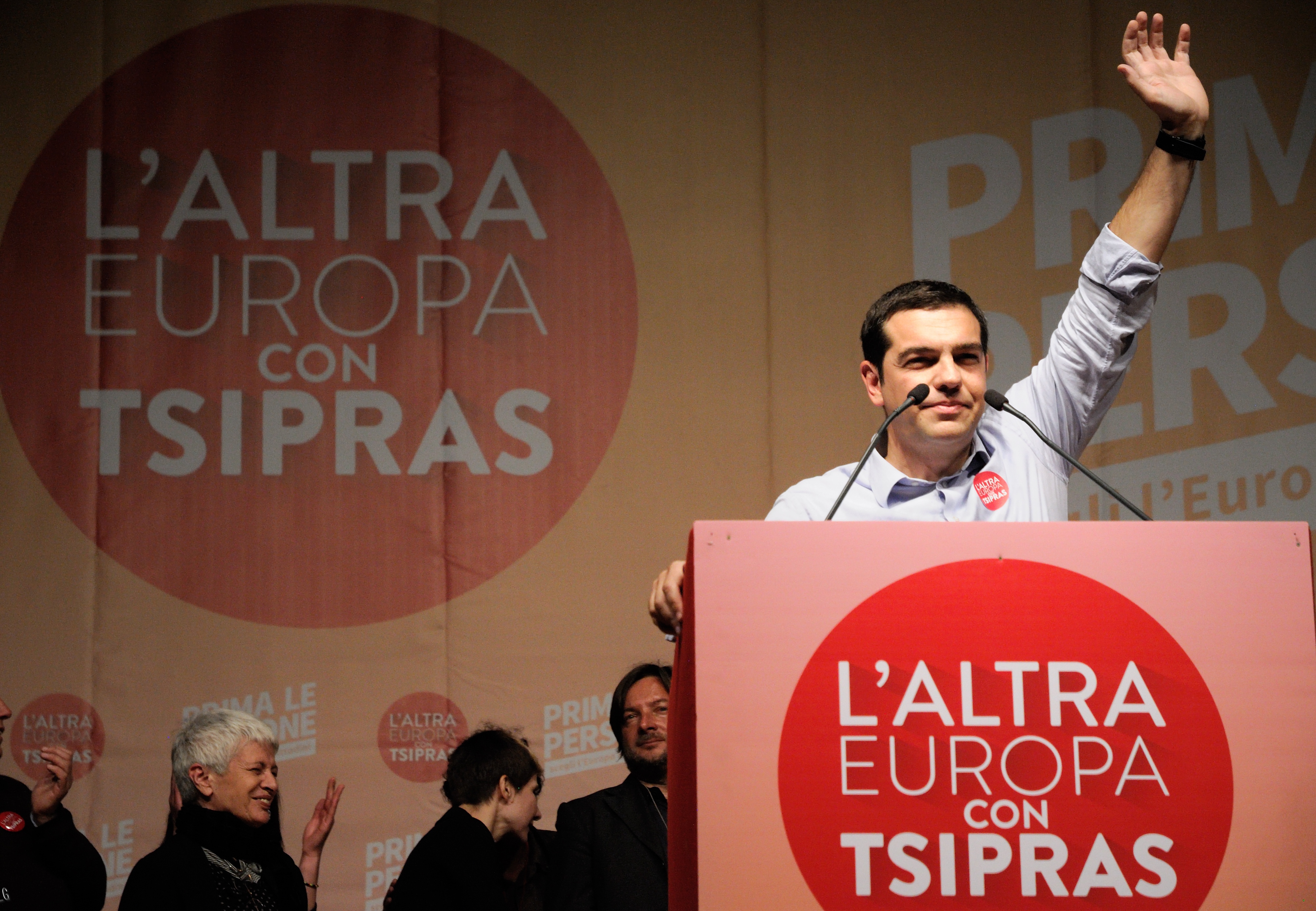
New Brave Europe ha pubblicato questa risposta al pezzo di Marco Revelli su il manifesto che polemizzava con Mélenchon e con il mio articolo su Micromega, questo l'incipit: "Dare a Tsipras quel che è di Tsipras. Una sinistra incapace di riconoscere i propri punti di riferimento e di dar conto del loro merito, pur senza rinunciare al dovere di critica, è destinata alla fine miserevole che ha fatto. Tre anni fa tutti a sgomitare dietro ad «Alexis». Oggi va di moda l’accusa di «tradimento» alla Mélenchon o la dichiarazione di fallimento alla Cesaratto". Sto lavorando per una traduzione in italiano.

Revelli, SYRIZA and giving to Caesar what it is due to him…


Sergio Cesaratto is Professor of International Economics and of Monetary and Fiscal Policies in the European Monetary Union, University of Siena


Stavros Mavroudeas is Professor of Political Economy at the Department of Economics at the University of Macedonia, Thessaloniki


In a recent article Marco Revelli published in Greek and Italian – a habitual guest in Greece of SYRIZA and its government – made a diatribe against what he called ‘pseudo-left’ for considering Tsipras a traitor and SYRIZA’s economic policy a failure. In an uncalled-for polemic (that included one of the signatories of this reply, here his article in New Brave Europe), he accused this ‘pseudo-left’ for being nationalist and for helping the populist and nationalist right-wing ND in Greece. Revelli gratuitously equates every left criticism of SYRIZA’s policies with the neoliberal one of ND.
Revelli uses as title of his piece (in Greek) the evangelic dictum (‘give Caesar what is due to him and give God what is due to him also’). Let us see if the dues he offers to his Caesar or God (in this case SYRIZA) are correct or not.

lunedì 16 luglio 2018

Tsipras’s tie - La cravatta di Tsipras in inglese-

 New Brave Europe ha tradotto e pubblicato il pezzo sulla Grecia già uscito su Micromega online. Grazie all'amico Methew Rose.

Sergio Cesaratto – Tsipras’s tie. What moral can we draw from the Greek crisis?

Klaus Regling, the head of the eurozone’s bailout fund and a German, concerning the most recent EU “debt relief” for Grecce: “It is the biggest act of solidarity that the world has ever seen” (Reglings motto seems to be: Von Trump lernen heißt siegen lernen). Sergio Cesaratto sees this differently.

Sergio Cesaratto is Professor of Growth and Development Economics and of Monetary and Fiscal Policies in the European Monetary Union, University of Siena

Cross-posted from Politica & Economia Blog
Translated and edited by BRAVE NEW EUROPE
Image result for wikimedia commons tsipras schäuble

But what a shameful little story that I have to tell…

“Athens breathes” was the title of the Italian newspaper “il manifesto” of 23 June, the agitprop of Tsipras in Italy. Greece “is beginning to regain control of its own destiny”, writes Roberto Musacchio (a former radical-left MEP)  who proclaims that “we need a battle for the liberation of Europe”, in line with Alfonso Gianni (a former radical-left MP), again in “il manifesto”, according to whom “the debt issue is not just a Greek or an Italian one, but concerns the balance and the future of Europe and must be tackled at that level”. In short, Greece has made it, finally we are changing Europe. Unfortunately, this is not the case and such announcements seem to be news similar to Saddam´s journalists who proclaimed victory while American tanks rolled into Baghdad.

giovedì 16 luglio 2015

Un commento dalla Grecia (in inglese)


SYRIZA betrays the resounding NO vote of the Greek people and signs a 3rd troika austerity program
The Left should create a popular front against the EU
Stavros Mavroudeas
 Professor of Political Economy

In the 5th of July 2015 the huge majority of the Greek people (61%) rejected the insolent demands of the EU for the extension and deepening of the austerity and pro-capital restructuring policies in Greece. These demands were codified in the so-called Juncker Plan for Greece that set barbaric terms for the extension of the previous austerity program (the 2nd Economic Adjustment Program for Greece) in exchange for releasing much delayed tranches of the troika loans to Greece. These tranches were urgently needed for repaying instalments of previous loans by the troika. As I have argued in a previous note (‘The Greek referendum and the tasks of the Left’) SYRIZA was led unwillingly to call this referendum because of the failure of its unrealistic program for a ‘decent compromise’ with the EU and for ‘staying in the Eurozone at any cost’. Moreover, the whole affair proved beyond any doubt that EU is a capitalist and imperialist integration that cannot be reformed towards serving peoples’ needs.

mercoledì 29 agosto 2012

Replica a Wray - Parte 2


Ecco la seconda parte. La risposta di Wray è qui http://www.economonitor.com/lrwray/2012/08/29/minsky-and-mmt-in-the-news/. Utile perché contrappone due scuole: Kaldor-Thirlwall per i quali il vincolo della bilancia dei pagamenti è l'ostacolo principale alla crescita, l'altra (l'MMT) secondo cui con una moneta sovrana, oplà, il problema scompare.

A reply to Wray - Part 2

“The EMU could easily have self-destructed even with no current account deficits anywhere.” (Wray here)
“Trade issues within the eurozone …will remain a point of economic and political stress even with a full resolution of the liquidity issues…” (Warren Mosler)

In the part 1 I reviewed the MMT view that full monetary sovereignty is the key to full employment policies in all countries, provided that those with current account (CA) troubles have safe access to alternative sources of foreign liquidity - what is not the case in reality. I also examined the MMT’s claim that the Eurozone (EZ) cannot suffer from internal balance of payment (BoP) troubles as long as fiscal transfers from a significant federal budget backed by a genuine European CB are provided - what again is not the case in reality. In this post we shall return on Wray’s denial of the BoP origin of the EZ crisis. I agree with Wray, Bell-Kelton and other MMTs that in a currency union local states are partially deprived of fiscal policy as a tool to sustain aggregate demand[1]  (without forgetting that this power is anyway in many countries subject to the foreign constraint even with full monetary sovereignty), while the institutional design of the EMU is not able to assure full employment and the preservation of the traditional European welfare state in a non-OCA. As Godley 1991 pointed out:
“The fact that individual countries no longer have their own currencies and central banks will put new constraints on their ability to run independent fiscal policies. However, the collective formulation of fiscal policy would be a far more difficult business than passive ‘coordination’. Fiscal policies of the whole Community could be co-ordinated and expansionary: but they could also be co-ordinated and contractionary. How is the common formulation of fiscal policy to be achieved? By what institutions and according to what principles?”
But Godley found even
“more disturbing … the notion that with a common currency the ‘balance or payments problem’ is eliminated and therefore that individual countries are relieved of the need to pay for their imports with exports. Quite the reverse: the existence or a common currency makes a country more directly dependent on its ability to sell exports and import substitutes than it was before, particularly as it will then possess no means whereby it can (in the broadest sense) protect itself against failure” (hat tip to Ramanan).
Indeed, the crisis did not stem from an undisciplined fiscal behaviour of some peripheral countries  – they knew very well that “markets” would have punished them (the EMU was designed for this purpose) – but from the loss of competitiveness of some member countries, as Godley feared, and from some additional events brought about by monetary unification that nobody (with one exception) foresaw.